Standards, Procedures and Public Appointments Committee
Code of Conduct changes - Cross-Party Groups
Introduction
One of the functions of the Standards, Procedures and Public Appointments Committee, as set out in the Code of Conduct, is to consider information on whether Cross-Party Groups (CPGs) are complying with the Code of Conduct for MSPs ("the Code"). We are also responsible for considering complaints about CPGs and for the adoption, amendment and application of the Code. The Committee is proposing some changes to the Code of Conduct in relation to CPGs, as set out in Annexe A of this report.i
CPGs are one of the ways in which MSPs can engage with stakeholders. CPGs can provide a valuable opportunity for MSPs to inform themselves on policy issues and to seek to influence debate and policy. Given the link they provide between stakeholders and MSPs, it is important that there is transparency around the work of CPGs. The Committee takes care in its role of monitoring compliance with the rules regarding the establishment and operation of CPGs.
Over the course of this Session we have regularly considered reports about overall CPG compliance and, where appropriate, have taken action to remind MSPs of their obligations to ensure any CPG of which they are an office bearer operates in compliance with the Code. Actions taken by the Committee have included withdrawing recognition from a number of CPGs that were either wholly non-compliant with the Code or had not complied with what we consider to be the minimum requirements in relation to holding the required number of meetings or submitting annual returns.
In light of our observations about CPGs' activity during the Session we undertook a consultation with MSPs on some proposed changes to the Code. MSPs who are Conveners of CPGs were asked to consult with any secretariat to a Group before submitting a response. The consultation covered the following themes:
Re-establishment of CPGs
CPG membership and office bearers
Operation of CPGs
Compliance.
The consultation, which was anonymous, set out 10 questions with Members given the option to select 'Yes', 'No' and 'Don't know' responses along with an option to self-describe where one of those options did not reflect their position. Each question also provided a free text box that allowed Members to add comments on each question if they wished. A total of 36 responses were received, 25 of which included additional comments from Members. The survey questions and overall responses are provided at Annexe B of this report. The individual responses can be accessed via Annexe C.
Consultation themes
Re-establishment of CPGs
The Committee is proposing to extend the period within which a CPG can re-register after a Scottish parliamentary election from 90 calendar days to 120 calendar days. The Committee considers that this would offer more opportunity for MSPs - particularly newly elected MSPs - to build a fuller picture of their commitments and how much time they would be able to devote to CPGs.
Overall, there was support for this proposal with 69% of Members indicating that they would be in favour of this change. Comments on the proposal indicated that then change would assist new Members to get to know their role better and to decide how they might wish to prioritise their time. One secretariat noted that the proposal would allow "time for a proper review of the CPG to ascertain if it is still required and does not overlap with the remit of other CPGs."
Other comments considered the question of re-registration in more general terms, questioning whether automatic re-registration should continue and whether it would be better for all CPGs to have to register again at the start of each Session. The Committee does not intend to consider any changes to the rules regarding re-registration at present but recognises that this may be an area for consideration by our successor committee.
CPG membership and office bearers
An overarching concern for the Committee is whether Members are able to actively engage in all CPGs of which they are members and, by extension, if some CPGs are established that will struggle to comply with the requirements of the Code over the course of a parliamentary Session. The Committee therefore consulted on proposals to limit both the number of CPGs of which each MSP can be a member and the number of CPGs for which an MSP can be an office bearer.
We have suggested that there should be a limit of 10 CPGs of which an MSP can be a member at any one time. 72% of responses to the consultation agreed with this proposal while 25% disagreed. Comments received on the proposal indicated that some MSPs support the introduction of a limit but consider 10 to be too high with suggestions that 8 or 6 would be appropriate lower limits.
The Committee proposed that an MSP should be able to be an office bearer of a maximum of 5 CPGs at any one time. Again, 72% of responses to the consultation agreed with this proposal while 25% disagreed. Similarly to the position with the proposed limit on CPG membership, the views of those providing additional comments was that a slightly lower limit would be appropriate to ensure that those MSPs are able to devote their attention to those roles. Given the central responsibility of MSP office bearers, particularly Conveners, to ensure that CPGs are complying with the Code the Committee agreed that a lower limit would be appropriate and is recommending the limit is set at 3 CPGs.
The Committee also consulted on the introduction of deadlines within which any issues with MSP membership or office bearers should be rectified, such as where an MSP resigns from a CPG. At present no such deadlines are set out. In some instances this has resulted in CPGs being non-compliant with the rules for an extended period of time. The Committee therefore proposed that a requirement is introduced for any such issues to be resolved within 90 calendar days. This timeframe was suggested to provide sufficient time for a CPG to take action while also ensuring that recess periods can be taken into account. Members responding to the consultation expressed support for these proposals with 72% supporting the MSP membership proposal and 94% supporting the office bearer proposal.
Operation of CPGs
The issues on the operation of CPGs on which the Committee consulted related to requirement for providing information about CPG meetings.
The first suggestion was the introduction of a requirement for CPGs to notify the Standards Clerks of the cancellation of a CPG meeting and for this notification to be provided on or before the date of the meeting. We recognise that there are a number of reasons why a CPG meeting may be cancelled, including due to late changes to the scheduling of parliamentary business. However, as the number of meetings that a CPG holds is one of the key compliance requirements, we consider that it would aid transparency and governance of the CPG system for such a requirement to be introduced. Just over 61% of respondents supported this proposed change.
The second change relates to the introduction of a deadline by which minutes of CPG meetings must be provided to the Standards Clerks. At present there is no deadline for minutes to be provided and this has created some substantial gaps in the information available to the SPPA Committee in its role in monitoring compliance with the Code. The minutes of CPG meetings are a key document in providing transparency about a Group's activities and in assessing whether a Group is operating in compliance with the Code. The Committee is aware that practice across most CPGs is for minutes to be considered and ratified by a Group at its next meeting. The Code already allows for Groups to provide draft minutes that can be replaced by a final version when endorsed by the Group. This option is not used by most Groups.
In circumstances where the subsequent meeting of a Group is cancelled or does not meet the MSP attendance requirements to be quorate, this can mean that signification periods of time - sometimes more than 6 months - can pass before information about a Group's discussions and decisions is published. Given that the existence of a separate regime for transparent about CPG activities was one of the reasons for the exemption relating to CPG activities being included in the Lobbying (Scotland) Act 2016, we consider that action is required to address this issue.
We are therefore proposing two changes in relation to CPG minutes. The first is to introduce a requirement for minutes to be submitted within 30 calendar days of the date of a meeting. As is the case at present, these can be draft minutes that can be replaced with a finalised version once that is agreed by a Group. The other is to specify that the content of the minutes should include details of those present at a meeting, along with a brief summary of the issues discussed and actions agreed. Minutes that are substantially verbatim transcripts of meetings would not be accepted.
There was support for this suggestions from just under 64% of those responding to the Committee's consultation, while just under 28% were opposed. Concerns were raised about the potential administrative burden for secretariats resulting from the introduction of these requirements. We understand these concerns but consider that our proposals are a proportionate approach given the crucial importance of CPG minutes as set out above.
Compliance
The Code sets out that CPGs are formed and led by MSPs, with the Convener of a Group being primarily responsible for compliance with the Code. There have been instances in which misunderstanding of the rules or miscommunication with secretariats have been cited as reasons for non-compliance with the Code. The Code already requires that certain information must be provided by the Convener of a Group. The Committee is proposing to enhance this by requiring that any documentation required under the Code (the registration form, minutes and annual returns) must be submitted by the Convener from their own parliamentary email address. To aid communications, the Committee is also proposing that there should be a maximum of three contact points for each Group, with these being the Convener, the Secretary and one other individual designated by the Convener. 69% of respondents supported this proposal.
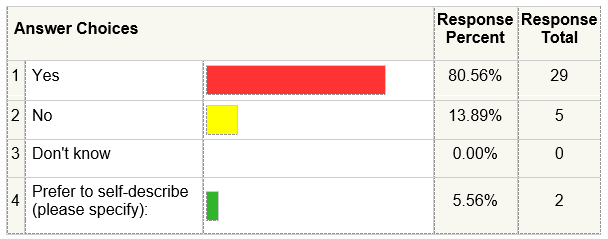
The Committee also proposes that that the rules set out that recognition will be withdrawn from CPGs that fail to fully meet the requirements of the Code for more than one year in a row. The Committee considers that any Group that finds itself in that position is not sustainable. Groups would have the risk of this brought to their attention following the first year of non-compliance. 80% of respondents supported this proposal.
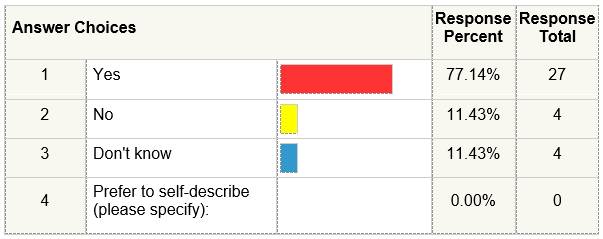
Our final proposal is that in exceptional circumstances Groups should be able to request permission from the Committee to suspend activities for a period of up to one year. We recognise that circumstances might arise where those involved in a Group, both MSPs and non-MSPs, may not be in a position to meet the terms of the Code. While 77% of respondents supported the introduction of this provision, comments reflected views that a Group was either viable or not. The Committee understands that view but considers that the introduction of this option is worth testing. As with all other changes we have proposed, there would be an ongoing responsibility on the Committee and its successors to monitor compliance with the Code and consider any further changes to support a healthy and transparent CPG system.
Conclusion
The Committee recommends to the Parliament the changes to the Code of Conduct in relation to Cross-Party Groups as set out in Annexe A of this report. If agreed to by the Parliament the changes to the Code would take effect for Session 7.
Annexe A: Draft Code of Conduct changes
Introduction
1. CPGs provide an opportunity for Members of the Scottish Parliament (MSPs) to engage with external stakeholders on a particular subject.
2. CPGs are not formal parliamentary business and should not be confused with the Parliament’s committee system.
3. CPGs are formed and led by MSPs although it is expected that groups will also have non-MSP members.
4. CPGs do not have any power to introduce issues formally into the parliamentary or government systems.
5. CPGs do not have access to any financial or staffing resources, other than is necessary for all CPGs to meet in the Parliament.
6. Any queries about the rules for CPGs, meeting notifications or documentation should be emailed to the Standards Clerks at crosspartygroup@parliament.scot.
7. CPGs must comply with the following rules. CPGs must also comply with any relevant policies that are set by the Scottish Parliamentary Corporate Body (SPCB). These policies are set out in the library of policies created by the SPCB on the Scottish Parliament website.
Membership and office bearers
8. Any MSP may be a member of a CPG. An MSP may be a member of no more than 10 CPGs at any one time. An MSP may be an office bearer in no more than 3 of the CPGs of which they are a member.
9. A CPG must have at least 5 MSP members including at least one MSP from each of the parties or groups represented on the Parliamentary Bureau. The party representation requirement may be modified or waived by the Standards, Procedures and Public Appointments Committee (the Committee) in certain circumstances.
10. CPGs may also have members who are not MSPs. Non-MSP membership is split into two categories: individuals and organisations. Where someone joins a CPG in connection with a role they have in, or to represent the views of, a specific organisation, it is the organisation that is considered to be the member of the CPG. Any decisions about membership, including whether to limit the number of non-MSP members, are a matter for the Group itself.
11. One of the MSP members of the Group must be elected as Convener; the Group must also have at least one other MSP office bearer. Groups are required to elect office bearers at the initial meeting and at every subsequent Annual General Meeting (AGM). The re-election of office bearers should be held at the Annual General Meeting (AGM). Beyond these requirements, any decisions about the structure of office bearer positions are a matter for the Group itself.
12. Any changes to the membership or office bearers of a CPG must be notified to Standards Clerks within 30 days of the change. Changes to office bearers or MSP membership must be notified by the Convener of the Group, or the Convener’s authorised signatory. Any changes to the non-MSP membership can be notified by the secretary of the Group.
13. If a Group ceases to comply with the MSP membership or office bearer requirements, the Convener must ensure that the non-compliance is resolved within 90 calendar days of the non-compliance arising. Actions to be taken by the Convener may include seeking a waiver of the MSP membership requirements from the Committee.
Establishment of CPGs
14. Once a CPG has the required MSP membership for a Group, an initial meeting should be held. The date and time of this meeting must be notified to the Standards Clerks at least 10 calendar days before the meeting taking place. The meeting will be added to the Parliament’s website by the Standards Clerks.
15. Two MSPs, who intend to be members of the Group, must attend the initial meeting. This meeting should be used to elect the office bearers, confirm the name and purpose of the Group, confirm the membership of the Group and discuss all other information that must be added to the registration form. Minutes of this meeting must be taken.
16. After this initial meeting Groups cannot meet again, formally, until the Group has been accorded recognition by the Committee.
17. New Groups will not be permitted to be established after March in the year preceding an election, except in exceptional circumstances.
Registration of CPGs
18. No later than 30 calendar days after the initial meeting, the Convener of the proposed Group, or the Convener’s authorised signatory, must submit a completed registration form to the Standards Clerks.
19. The registration form sets out the information that a proposed Group must provide.
Consideration by the Standards, Procedures and Public Appointments Committee
20. Once the registration form has been received by Standards Clerks one of the proposed Group’s MSP office bearers (usually the Convener) will be invited to attend a meeting of the Committee to explain the justification for the proposed Group.
21. The Committee will pay particular attention to a proposed Group’s purpose. If the Committee considers that a proposed Group is not in the public interest but is intended, for example, to further particular commercial interests, the Group will not be accorded recognition. The Committee will also consider whether the purpose of a proposed Group overlaps the remit of an existing Group. The proposed Group will be asked to provide justification as to why its aim could not effectively be achieved within the existing Group.
22. Only Groups accorded recognition can use the title ‘Cross-Party Group in the Scottish Parliament’ and have access to Parliamentary facilities.
Re-registration following a general Scottish Parliamentary election
23. A previously recognised Group may re-register within 90 120 days of the first meeting of the Parliament following an ordinary or extraordinary general Scottish Parliamentary election. For the purposes of calculating the 90 120 day period, no account will be taken of any time during which the Parliament is in recess for more than 4 days.
24. A Group seeking to re-register must hold an initial meeting and elect office bearers. Following the initial meeting the Convener of the proposed Group, or the Convener’s authorised signatory, must submit a completed registration form to the Standards Clerks.
25. If the Group meets the criteria detailed below the Standards Clerks, in consultation with the Convener of the SPPA Committee, will undertake a sifting exercise and highlight applications to be referred to the Committee for further scrutiny (either through a paper to the Committee or an evidence session with the Convener of the proposed group). For example, a Group may be referred to the Committee if it had failed to comply with the Code of Conduct in the previous Session.
26. The Standards Clerks will apply the following criteria to re-registrations—
Name and purpose of Cross-Party Group: These must be the same as were registered in the previous Session.
MSP membership: There must be at least 5 MSP members including at least one MSP from each of the parties or groups represented on the Parliamentary Bureau.
Non-MSP membership: There are two categories of membership, individual and organisational. For organisational members, it is the organisation that is the member and not the individuals that attend from that organisation. An individual or organisation is not a member of a Group until Standards Clerks have been informed.
Office Bearers: There must be at least 2 MSP office bearers and one of these must be the Convener of the Group.
Financial Benefits: Value and source of any financial benefit must be given. In the first instance, the Group will be contacted and asked to provide more information.
Contact: Must be the Convener of the Group.
27. Groups that do not require further scrutiny will be re-registered.
28. If the Group does not meet the criteria, the Standards Clerks will draw the application for re-registration to the attention of the Convener of the Committee. The Convener will decide whether the Group can be re-registered or if the application should be considered by the Committee.
Operation of CPGs
29. All CPGs must hold at least two formal meetings per year (not on the same day), and one of these must be the AGM.
30. All meetings, including the initial meeting, must be notified to the Standards Clerks at least 10 calendar days before the meeting. Details of all meetings will be published on the Parliament’s website. If a CPG meeting is cancelled or rearranged, notification must be provided to the Standards clerks by no later than the day after the meeting was originally scheduled to take place.
31. CPGs must hold an AGM within 11-13 months of the date that the Group was established (in the current session) and subsequently between 11 and 13 months after each AGM.
32. The AGM must be used to re-elect the office bearers and to review the work the Group has carried out over the preceding year.
33. Within 30 calendar days of holding an AGM, the Convener of a Group, or the Convener’s authorised signatory, must submit a completed annual return form to the Standards Clerks. The information that Groups are required to provide are as set out in the annual return form.
34. In exceptional circumstances, a Group may request permission from the Standards, Procedures and Public Appointments Committee to suspend the Group’s activities for a single period of up to twelve months within a Session. Any such request must be made by the Convener of the Group.
35. All meetings must be attended by at least 2 MSPs who are registered members of the Group. Any MSP who is not a member of the Group is entitled to attend and participate at a meeting but will not count towards this requirement.
36. Attendance and participation by non-MSPs who are not registered members of a Group is at the discretion of the Group and therefore Groups are within their rights to refuse non-members entry to the meeting.
37. The right to vote on Group matters is restricted to registered members of the Group, both MSP and non-MSP. However, Groups which charge a subscription may restrict voting rights to members who have paid the subscription charge.
38. Each recognised Group will have a page created on the Parliament website.
39. CPGs must provide minutes of all meetings to the Standards Clerks, including the initial meeting. Minutes (which can be draft minutes) must be provided within 30 calendar days of a meeting and must be submitted by the Convener of the Group. Minutes must list all those who attended the meeting and provide a brief summary of issues discussed and actions agreed. This list of those who attended should include all MSPs and non-MSP attendees and information on whether the attendees were members of the Group or invited observers (an individual or organisation is not a member of a Group until Standards Clerks have been informed). The Standards Clerks will publish minutes (including draft minutes) and agendas on each Group’s page on the Parliament website.
40. Groups may provide agendas of meetings to the Standards Clerks to be published on their web page.
41. No papers other than registration forms, annual return forms, minutes and agendas will be posted on a Group’s page on the Parliament website. However, if a Group wishes, it can request that a link to an external website is added to its page. The request must be made by the Convener who must confirm that they accept the following conditions—
the Scottish Parliament is not responsible for the content of external internet sites
the Convener of the Group has viewed the website and is content that the link is appropriate
complaints about the content of external sites will be directed in the first instance to the Convener of the group
the Scottish Parliament reserves the right to refuse to establish links to an external site
responsibility for checking links on the Scottish Parliament website to ensure that they are working lies with the Convener of the group and that, in the event of discovering a link which no longer works, the Convener will inform the Standards Clerks.
42. Groups may form sub-groups to focus on particular elements of the Group’s purpose. A meeting of a sub-group must be notified to Standards Clerks 10 calendar days before the meeting and two MSP members must be in attendance at the sub-group meeting. Any decisions made by a sub-group must be ratified at a subsequent meeting of the full Group.
43. In addition to the Convener and Secretary, each Group may designate one other individual who can provide information to the Standards Clerks about the activities of the Group. The Convener of a Group must confirm the name of this individual.
Change of name or purpose of CPGs
44. Any proposal to change the name or purpose of the Group must be drawn to the attention of the Committee. The Committee will consider the proposed change and decide if recognition should still be accorded to the Group.
Financial benefits
45. If a Group receives secretariat support from an employee of an external organisation, the value of any time that employee spends on supporting CPG activities should be calculated and, if over £500 per year, registered. The only exception to this is where the secretariat is provided by an individual in their own time; in these circumstances it is not considered that any financial benefit is received by the Group.
46. If the external organisation providing secretarial support is a consultancy/public affairs firm or a charity/not-for-profit organisation, that organisation must agree to provide, if requested by the Committee—
a full client list (if a consultancy/public affairs firm) and
a list of companies which have made a donation of more than £5,000 in the previous 12 months (if a charity/not-for-profit organisation).
Use of Parliamentary facilities
47. CPGs must respect the limitations on the use of Parliamentary facilities—
MSPs, but not other members of CPGs, may make reasonable use of the Parliament’s telephone, fax, photocopying, IT facilities and Parliamentary stationery in pursuit of CPG business. Groups may only use the Parliament’s IT facilities where these are available for public use.
Groups may not make use of free postage facilities provided by the Parliament.
Groups may not make use of the Parliament’s audio or broadcasting equipment and there is no provision for the televising or sound recording of their proceedings (other than as may be provided for in SPCB policy and in any SPCB terms and conditions on events).
Groups may not draw on the resources of the Parliamentary staff to service meetings other than to book meeting rooms; and
MSPs who are members of a CPG may use the services of the Parliament's Information Centre to brief themselves on matters relating to that Group, but other members of the Group may not.
Compliance with the Code of Conduct of Members of the Scottish Parliament (the Code)
48. The Convener of a Group is primarily responsible for ensuring that the Group complies with the Code. However, all other MSP members, and any secretariat, should also ensure that they are aware of the requirements in order to assist with the efficient operation of the Group.
49. To assist Groups in complying with the requirements of the Code, the Standards Clerks can provide guidance and advice.
50. The Committee will regularly consider information on whether Groups are complying with the Code.
51. Complaints that a Group has not complied with the Code will be considered in by the Committee. Failure to comply with the Code could lead to a Group’s recognition being withdrawn or to sanctions being imposed on individual MSPs. If a Group fails to comply fully with the Code for more than one year in a row, the Committee will withdraw recognition from that Group.
52. MSP members of a Group should be aware that benefits received in connection with a Group may also fall within the scope of the registration of interests under the Interests of Members of the Scottish Parliament Act 2006. If a member receives any such benefit, they should contact the Standards Clerks for advice on the registration requirements.
Annexe B: Survey questions and overall responses
Following an election, the Code allows CPGs that were recognised at the end of the previous session to re-register without, subject to certain criteria, requiring the approval of the SPPA Committee. Such re-registration currently requires to be completed within 90 days (not including any period of recess longer than 4 days) of the first meeting of the Parliament in the Session. This would mean that re-registrations could take place until around the end of October. The Committee considers that allowing a longer period for re-registration to take place would assist MSPs in being able to build a fuller picture of their commitments. The Committee proposes extending the deadline for re-registration to 120 calendar days. Do you support this proposal?
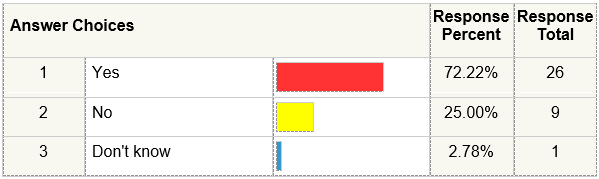
At present there is no limit on the number of CPGs of which an MSP can be a member. The Committee is of the view that there should be a limit of 10 CPGs of which an MSP can be a member. Do you agree with this proposal?
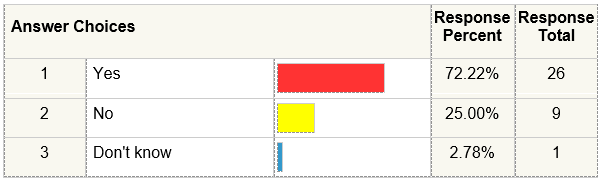
Similarly, there is no limit on the number of CPGs of which an MSP can be an office-bearer. The Committee considers that there should be a maximum limit of 5 CPGs on which a member can be an office-bearer. Do you agree with this proposal?
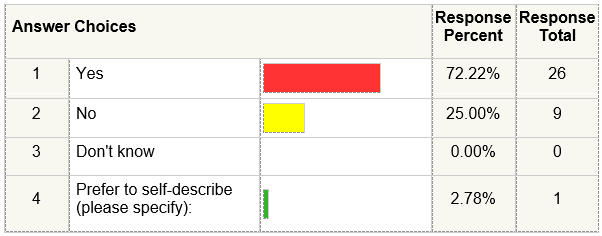
The Code requires that a CPG must have at least 5 MSP members, with at least one member from each party or group represented on the Parliamentary Bureau (a waiver can be applied to the cross-party element of this requirement). It is natural in the lifecycle of a Session that a CPGs members may resign from CPGs. The Code does not currently provide any information about the deadline for any membership issues to be rectified, if necessary, following a resignation. The Committee proposes that a requirement be added to the Code that CPGs have 90 days from the date of a resignation to rectify any non-compliance in membership that may arise from that resignation. Do you support this change?
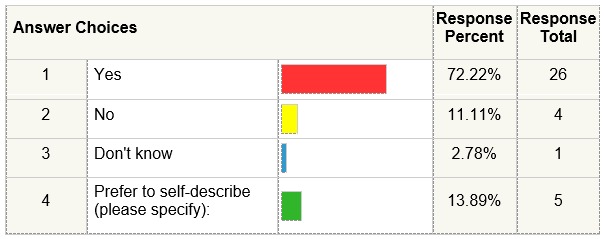
The Code sets out that election of office-bearers should take place at a CPG’s initial meeting and at each annual general meeting. The guidance on the Code also makes clear that election of office-bearers can be carried out electronically outwith a CPG meeting. However, the Code does not provide a deadline for a CPG to rectify any compliance issues should any MSP officer-bearer resign from their position. The Committee proposes that a requirement is added to the Code that CPGs have 90 days from the date of a resignation to rectify any non-compliance in office-bearers that may arise from that resignation. Do you agree with this suggestion?
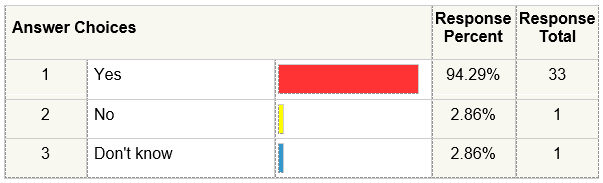
CPGs are required to provide the Standards Clerks with notification of meetings at least 10 calendar days in advance. However, there is no requirement to notify cancellation of meetings. Do you think the Code should be changed to required notification of cancellation to be provided on or before the date of a meeting?
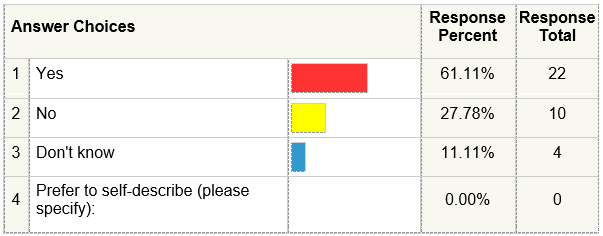
CPGs are required to provide minutes of meetings but the Code does not currently set out a deadline for minutes to be provided. The Code does not currently set out what the minutes of meetings should contain other than in relation to attendance. The Committee is proposing to introduce a requirement for minutes to be submitted within 30 calendar days of the meeting taking place and to stipulate that minutes should include details of those present at the meeting and a brief summary of the issues discussed and actions agreed. Minutes that are substantially verbatim transcripts of a meeting or which are not in the required template would not be accepted. Do you agree with this proposal?
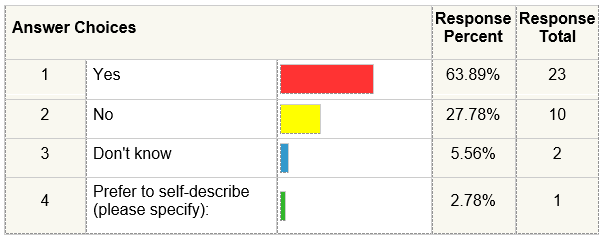
To assist compliance, the Committee is proposing that there should be a maximum of three contacts for each Group – the Convener, the Secretary (where secretariat support is provided by an external organisation this must be a named individual within that organisation) and one other contact. Any changes to the contact point would require to be notified by the Convener. The Committee is also proposing that any documentation required under the terms of the Code (registration form, minutes and annual returns) must be submitted by the Convener from their own parliamentary email address. Do you agree with this proposal?
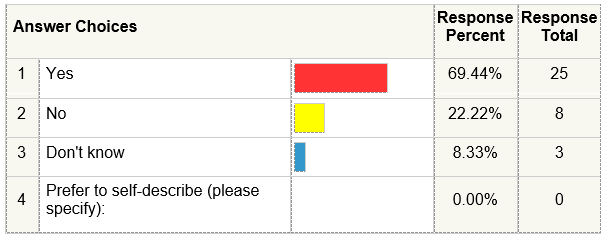
In light of the rates of non-compliance with the rules, the Committee is also proposing that the rules set out that recognition will automatically be withdrawn from CPGs that fail to fully meet the requirements of the Code for more than one year in a row. Do you support this proposal?
It has been suggested that there may be circumstances in which a Group may wish to request permission from the SPPA Committee to suspend its activities for a period of time, potentially up to a year, during a Session without recognition being withdrawn. Do you support this suggestion?
Annexe C: Written responses
Read the responses to proposed changes to Section 6 of the Code of Conduct in relation to the establishment and operation of Cross-Party Groups.